
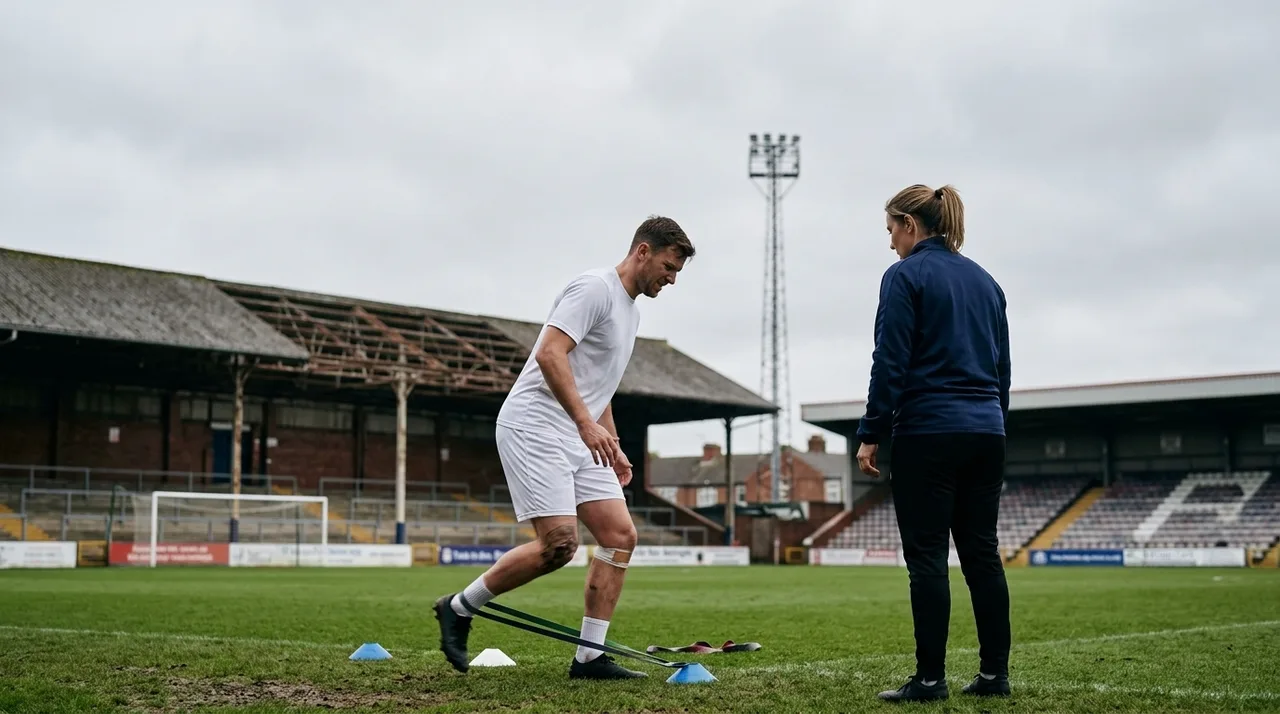
Wes Burns has spoken openly about the role Wales head coach Craig Bellamy played in keeping him going during what he described as a frightening period of rehabilitation following a serious knee injury sustained in January 2025.
A long road back
Burns tore his anterior cruciate ligament earlier this year, facing the kind of lay-off that ends careers and, by his own account, left him fearing he might not play again at all. The Leicester City winger missed 342 days of action, a stretch that would test any professional footballer's resolve.
Speaking publicly about the experience, Burns credited Bellamy with making him feel part of the Wales setup rather than cast adrift from it. According to Burns, the head coach framed his return not as an "if" but as a "when", a distinction that sounds small but can carry considerable weight during the bleaker stretches of a long rehabilitation.
What inclusion means during injury
There is a tendency in football management to quietly park injured players until they are close to fitness, letting the medical staff do their work and keeping the squad focused on the next match. Bellamy, it seems, took a different approach with Burns. Feeling included in the international set-up while unable to contribute on the pitch is the sort of thing that does not show up in any performance data, but players consistently describe it as making a material difference to their mental state and, by extension, to the pace and quality of their recovery.
Burns did not offer detail on exactly what form that support took, but the warmth with which he spoke about Bellamy suggests it went beyond the occasional courtesy message.
What it means for Leicester
For Leicester City, the return of a fit and motivated Burns is relevant business. The club are in League One this season, and the winger's experience at international level makes him a significant asset in the third tier. A player who has kept himself mentally sharp through nearly a year on the sidelines, and who speaks about his return with evident confidence rather than residual anxiety, is likely to hit the ground in better shape than many players who have been through comparable injuries.
Burns has not confirmed any specific timetable for a return to the Wales squad, but the tone of his comments suggests he views that as a realistic near-term prospect rather than a distant ambition. Whether Leicester's own schedule and the international calendar align is another matter, but the signs from the player himself are encouraging.
A broader point about management
It is worth noting, without overstating it, that Burns chose to talk publicly about Bellamy's role rather than focus solely on his own effort or his medical team's work. That is a deliberate acknowledgement, and it reflects reasonably well on Bellamy's man-management during what has been a mixed period for Welsh football more broadly.
For Leicester supporters, the immediate takeaway is straightforward: Burns sounds like a man who has come through his injury in good shape mentally, is eager to play, and has not lost any obvious motivation during a very long period away from the game. After 342 days, that is not nothing.
Frequently asked
- What injury did Wes Burns have?
- Burns tore his anterior cruciate ligament (ACL) in January 2025 and missed 342 days of football during his recovery.
- Is Wes Burns back playing for Leicester City?
- Burns has spoken about his recovery from a serious knee injury and appears to be working towards a return, though no specific comeback date has been confirmed in the source.
- What did Craig Bellamy do to support Wes Burns during his injury?
- According to Burns, Wales head coach Craig Bellamy kept him feeling included in the international set-up and told him his return to the squad was a matter of when, not if.