
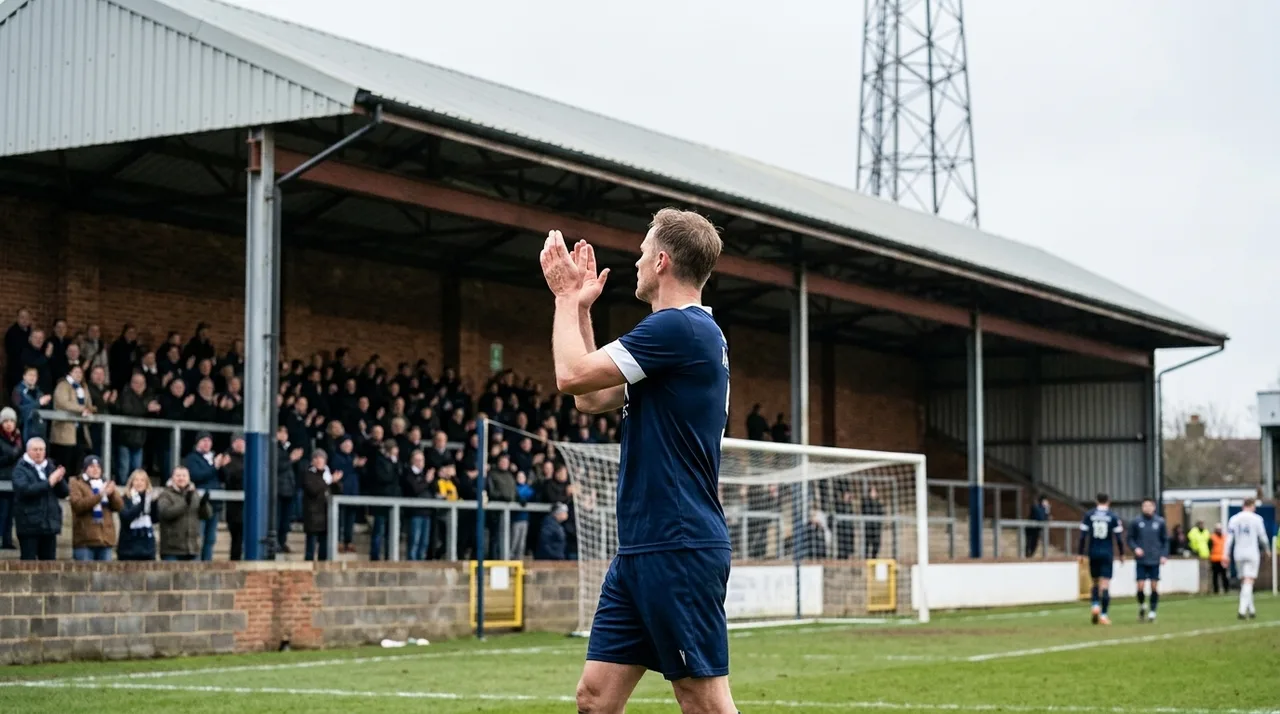
Byron Webster, the captain who lifted Bromley to League One for the first time in the club's history, has announced his retirement from playing and revealed he intends to pursue a career in coaching and management, with Bromley very much at the heart of those plans.
Speaking to BBC Radio London, Webster was candid about what comes next. "I need to learn how to be a coach, how to be a manager," he said. "I'm sure that will be around Bromley." The remarks signal not only the end of a playing career but the beginning of what could be a long association between the defender and the south London club in a different capacity.
The man who captained Bromley into the third tier
Webster's significance to Bromley is hard to overstate. He skippered the side through the National League and into League One, a achievement that rewrote the ambitions of a club that spent most of its existence well outside the Football League. For supporters who watched that promotion campaign, his name carries considerable weight.
His decision to retire brings the curtain down on a career that also included spells in the Championship and League One with other clubs. At Bromley, however, he found a home and a purpose, marshalling a defence that held firm when it mattered most during the promotion run-in.
A new chapter for club and captain alike
Bromley are now navigating their first season in League One, a division that presents challenges unlike anything the club has faced before. The step up in quality, intensity and squad depth required at the third tier is substantial, and the club's coaching setup will be crucial to how quickly they adapt.
Webster's expressed desire to learn his trade around Bromley raises the possibility that his experience could feed back into the club's development structures. Defenders who have played at this level and above bring an understanding of what is required that younger players and coaches can draw on directly. Whether that begins in a formal coaching role, a player-coach arrangement that eases the transition, or something more informal, remains to be seen.
What is clear from his interview is that Webster sees his future as intertwined with Bromley's. That kind of loyalty is not always guaranteed once a playing career ends, and the club's supporters will take genuine encouragement from the fact that one of their most important figures in recent memory has no intention of walking away from Hayes Lane.
Building for the long term
For a club still finding its feet in League One, continuity matters. Managers and players come and go, but the threads that run through an organisation and give it identity tend to come from people who have lived the journey. Webster has done exactly that, from the lower reaches of non-league football's top division all the way to the third tier of the English game.
His retirement as a player is naturally a moment of reflection for those who watched him lead Bromley out. But if his ambitions are realised, it may prove to be the start of a chapter that matters just as much to the club's story as the promotion campaign that brought them here.
Frequently asked
- Has Byron Webster retired from football?
- Yes. Webster has announced his retirement as a player. He has expressed a desire to move into coaching and management, with Bromley the club he expects that pathway to be built around.
- Will Byron Webster stay at Bromley after retiring?
- Webster told BBC Radio London that he expects his coaching and management education to happen around Bromley, suggesting he sees his future tied to the club even after hanging up his boots.
- What did Byron Webster achieve at Bromley?
- Webster captained Bromley to promotion into League One, the highest level the club has ever played at, making him one of the most significant figures in the club's recent history.