
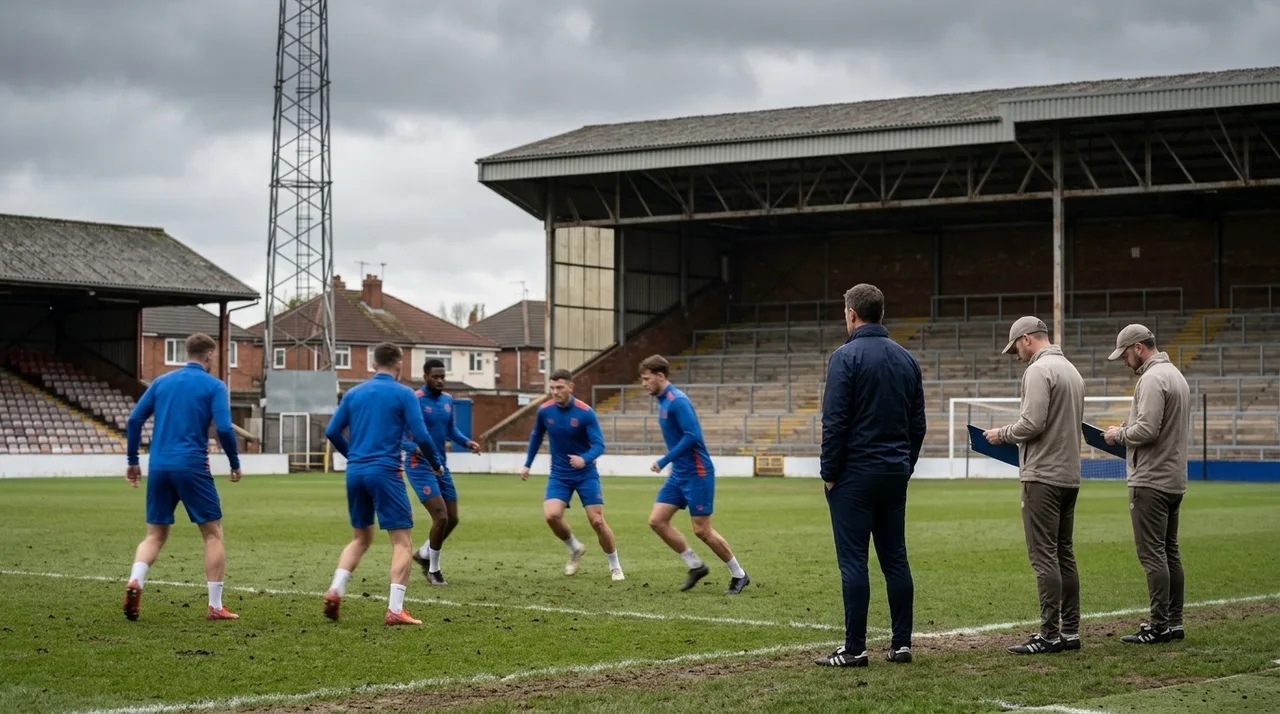
International breaks arrive at inconvenient moments for most League One managers. For Russell Martin at Leicester City, though, the fortnight away from competitive football offers something genuinely useful: time. Time to drill patterns, recover bodies and reset a squad that has been finding its feet in the third tier.
What the break gives Martin to work with
The radio discussion between Owynn and former Leicester assistant Michael Appleton centred on one core question: how does Martin extract maximum value from a pause that could easily become a lull? The answer, broadly, is that the break is only as productive as the work put into it.
Martin is known for a possession-heavy, high-press style that demands physical and mental buy-in from every outfield player. Early-season football rarely allows the repetition that style of play needs. Training-ground weeks, free from the Tuesday-Saturday rhythm, provide exactly that repetition. Set-piece routines, pressing triggers, the precise moments when a midfielder peels off to create an overload: these are the details that a short pre-season and a crowded fixture list can leave unfinished.
Leicester have been building towards that fluency. Watson noted recently that the style will "click into place," and Yoganathan praised the squad's attitude after a hard-fought draw. Both comments pointed to a group that is absorbing Martin's ideas but has not yet delivered them consistently for 90 minutes.
Fitness and freshness
With several players away on international duty, Martin's staff will use the break to give fringe players meaningful training minutes. For a squad that added goalkeeper Cornell following Stolarczyk's injury, continuity at the back is still being established. Defensive shape, and the triggers that send the press from the front line, need repetition between the same players to become automatic.
Appleton, speaking from experience of managing in the third tier, knows that the physical demands of League One are unrelenting. The fixture pile-up either side of an international window can leave squads short if they misuse the down time. Recovering legs while maintaining sharpness is a balancing act. Martin's approach will likely blend gym work with ball-dominant sessions rather than high-intensity running, keeping players match-ready without burning unnecessary miles.
The fixture context
Leicester's trip to Barnsley sits just around the corner once competitive action resumes. Barnsley represent a genuine test: a physical, well-organised side in a ground where atmosphere can make life difficult for visiting teams who are still ironing out their shape. Martin will want his players to arrive there with clarity on their roles, not still guessing.
That clarity is what the international break exists to provide. The clubs who use these windows well often look sharper for three or four games afterwards. Those who treat them as a rest period alone tend to find the transition back to match pace harder than expected.
The bigger picture at Filbert Way
Leicester's season is still being shaped. The squad is deepened by recent additions, the playing philosophy is understood if not yet fully embedded, and Martin has shown in his management career that he is willing to stick with his principles through an awkward adaptation period. The international break, managed correctly, could be the moment the pieces start to move together rather than alongside each other.
Appleton's view, shared with Radio Leicester listeners, was straightforward: Martin has the tools. The break is the window to use them properly. League One will not wait once it restarts.
Frequently asked
- When do Leicester City return to action after the international break?
- Leicester are set to travel to Barnsley in their next League One fixture once the international break concludes. Check Leicester City's official site for the confirmed date and kick-off time.
- What is Russell Martin's style of play at Leicester City?
- Martin favours a possession-based, high-pressing approach that demands precise movement and pressing triggers from his players. The system takes time to embed but rewards patience with fluid, attacking football.
- Who is in goal for Leicester City after the Stolarczyk injury?
- Leicester signed goalkeeper Danny Cornell to cover after Stolarczyk picked up an injury, adding experience to the squad's shot-stopping options.