
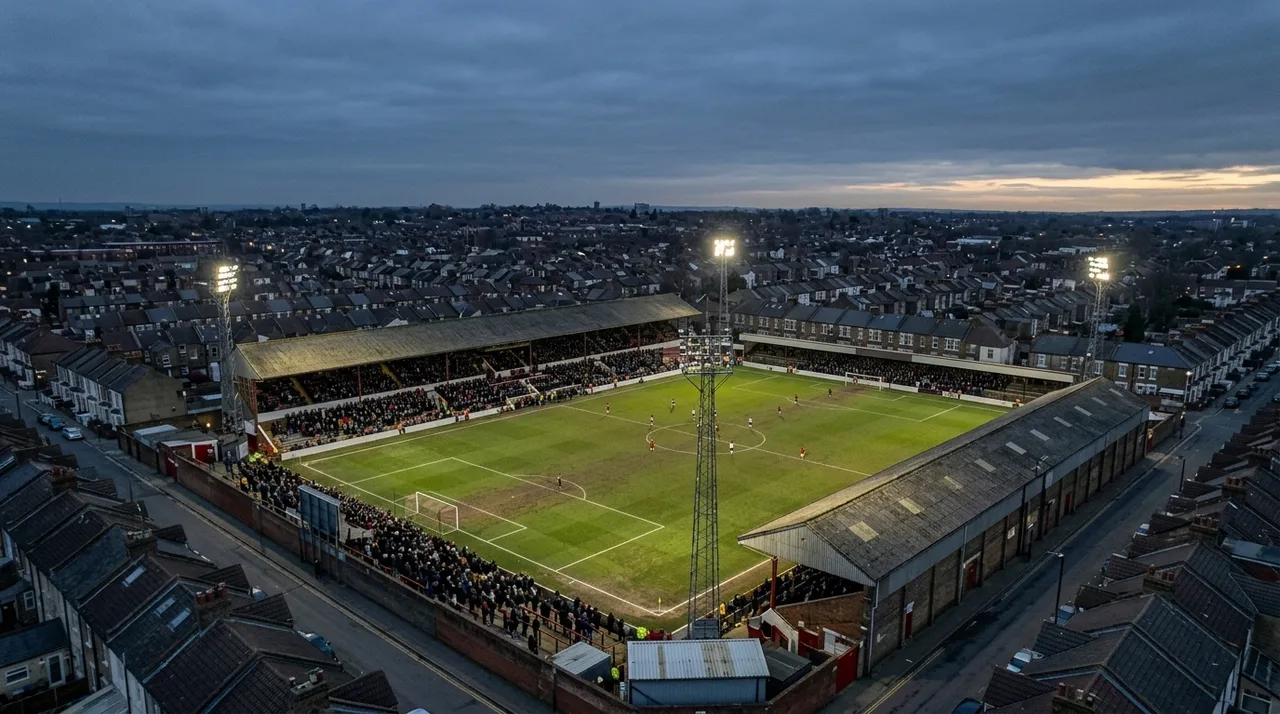
Leyton Orient majority shareholder David Gandler has given the clearest indication yet that the club is serious about leaving Brisbane Road, saying the site identified for a proposed new stadium will allow Orient to "grow and grow quickly".
The site and the scale
Speaking to BBC Radio London, Gandler described a "large-scale project" with capital expenditure "in the billions of pounds" that would "drive thousands of jobs" in east London. The precise location has not been disclosed, but last month Orient signed a second agreement with the London Borough of Waltham Forest to explore options for a multi-sport campus.
The target is to move into the new ground before the club's 150th anniversary in 2031, which would mean vacating Brisbane Road, their home since 1937. That is a tight timeline for a project of this stated ambition, and Gandler himself acknowledges the location has only been "identified" rather than confirmed. Planning, procurement and construction for a stadium costing billions of pounds typically takes the better part of a decade even when things go smoothly, so 2031 looks aspirational at this stage.
"We've identified something that we think will achieve our overarching goals," Gandler said. "There's an opportunity here to build something unique in an area of London where I believe there is a site that can allow us to grow."
The east London pitch
Gandler's language leant heavily on east London's development potential, referencing what he called a coming period of "hyper-growth" in the area. Whether that reads as a genuine strategic rationale or as the kind of press-release optimism that tends to accompany these announcements is a fair question, but the Waltham Forest partnership does at least give the proposal an institutional footing beyond pure ambition.
He also flagged youth employment as a specific priority, citing concerns about opportunities for college and university graduates. A multi-sport campus of the scale Gandler is describing would, in theory, generate a range of non-football jobs around hospitality, sports science and community programming, though those benefits are some distance away from being concrete commitments.
Tickets and affordability
One element that supporters will note with interest: Gandler said he wanted to keep ticket prices "flat, to some degree" regardless of the cost of the new facility.
"English fans have been priced out of the game," he said. "My goal is to ensure that we're able to keep football affordable and give children, parents and grandparents an opportunity to spend time together."
That is a notable pledge given the financial scale he is talking about, and it will be worth measuring against whatever pricing structure eventually emerges if the project reaches fruition. Supporters have heard similar commitments from clubs before a stadium move, only to find that shiny new hospitality tiers and naming-rights deals quietly reclassify what "affordable" means.
Where Orient stand now
The club are currently in League One, their fourth successive season in the third tier. Gandler's vision of a multi-billion-pound campus sits in an interesting tension with that on-pitch reality, though ambition about infrastructure and ambition about footballing performance are not mutually exclusive. Plenty of clubs have grown their facilities while building steadily through the divisions.
For now, Brisbane Road remains home, and the precise site of the proposed new stadium remains under wraps. The Waltham Forest partnership is a real and documented step forward; everything else is, by Gandler's own framing, still at the exploration stage. Orient supporters will no doubt want to see planning applications before they start ordering their 2031 season tickets.
Frequently asked
- Where will Leyton Orient's new stadium be built?
- The exact location has not been disclosed. The club has signed an agreement with the London Borough of Waltham Forest to explore options for a multi-sport campus, but no site has been publicly confirmed yet.
- When do Leyton Orient plan to move into their new stadium?
- The club's stated target is to be in a new stadium by 2031, which would coincide with their 150th anniversary. That timeline is described as aspirational given the scale and complexity of the project.
- Will ticket prices go up at Leyton Orient's new stadium?
- Majority shareholder David Gandler has said he wants to keep ticket prices 'flat, to some degree' regardless of the cost of the new development, with affordability described as a key community goal.