
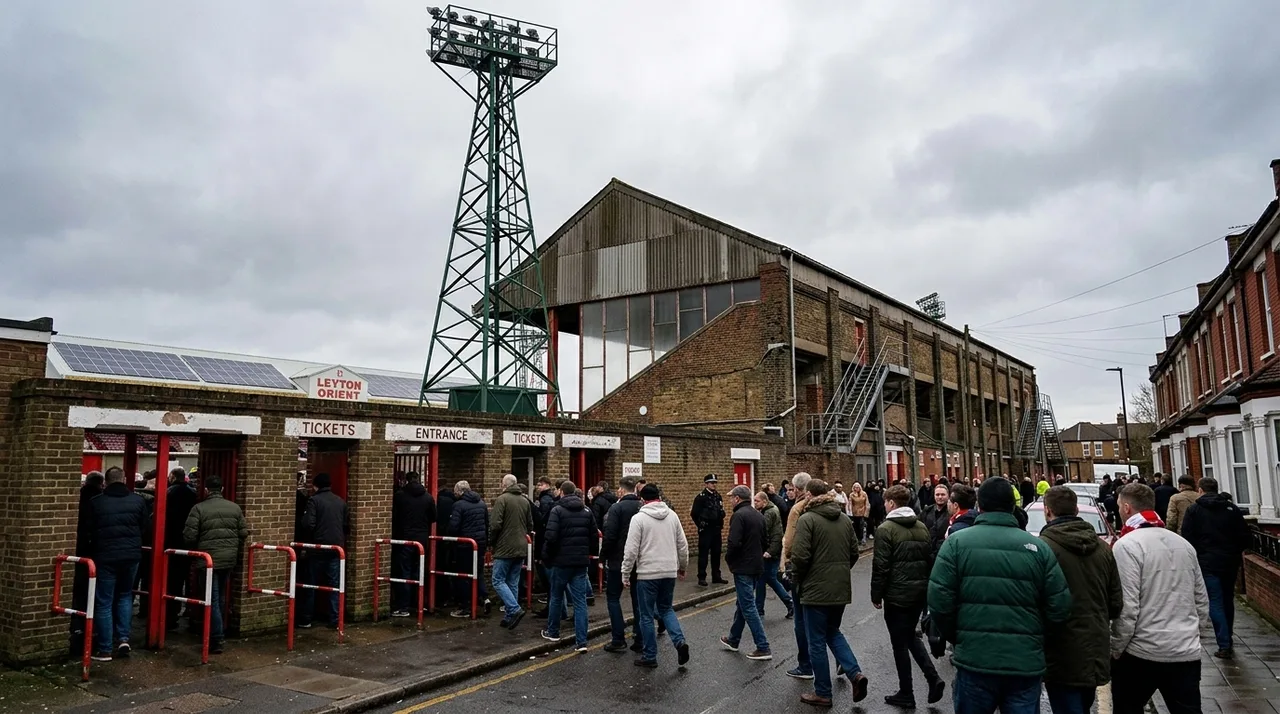
Leyton Orient's majority shareholder David Gandler has gone public on the scale of the club's stadium ambitions, telling BBC Radio London that a site has been identified within the London Borough of Waltham Forest that will allow the club to "grow and grow quickly".
The announcement follows last month's signing of a second agreement between Orient and Waltham Forest Council, which commits both parties to further exploring a multi-sport campus. The club's stated target is to be playing in a new ground by 2031, the year of their 150th anniversary, which would mean leaving Brisbane Road after nearly a century at the address.
Billions of pounds, thousands of jobs
Gandler was notably candid about the financial weight of the project. Speaking to BBC Radio London, he described it as a "large-scale project" with capital expenditure "in the billions of pounds" that would "drive thousands of jobs" in east London. The precise location of the site has not been disclosed, and it is worth noting that ambitions of this magnitude, attached to a club at third-tier level, will attract a degree of scepticism until planning applications and funding structures become visible.
What Gandler did offer was a broader vision of Orient as a vehicle for urban regeneration. "I think Leyton Orient, despite its long heritage, is a blank canvas," he said. "It is located in east London, an area that I believe will enter hyper-growth." He also flagged a concern about youth employment, suggesting the campus would be "very focused on youth jobs" and opportunities for college and university leavers.
Whether that rhetoric survives contact with a planning committee remains to be seen, but the direction of travel is clear enough: Gandler wants a purpose-built home, not a renovation of the existing ground.
Ticket prices: a commitment worth watching
Perhaps the detail supporters will seize on most is Gandler's pledge on affordability. He said he wanted to keep ticket prices "flat, to some degree", adding: "English fans have been priced out of the game. My goal is to ensure that we're able to keep football affordable and give children, parents and grandparents an opportunity to spend time together."
It is, on the face of it, an unusual promise to make at the same time as announcing a project costing billions. Stadium financing of that scale typically comes with commercial pressures that push ticket prices upward, particularly in a London market. Supporters will be hoping the commitment is recorded somewhere more binding than a radio interview.
What this means for a League One club
Orient are in their fourth successive season in League One. The club spent a solitary season in the top flight in the 1960s and have spent long stretches lower down the pyramid. Gandler's vision, then, is not merely infrastructural but explicitly about the trajectory of the football club itself, the idea being that a new stadium generates the revenue to close the gap between Orient's current standing and the ambitions of its ownership.
That logic is not unreasonable. Grounds of around 5,000 to 6,000 capacity, which Brisbane Road roughly offers, constrain matchday income in ways that make it genuinely difficult to compete sustainably at the upper end of League One, let alone in the Championship. A larger, modern venue in east London, were it to materialise, would change the club's financial profile substantially.
But there is a long road between a signed memorandum of understanding with a council and a spade in the ground. Planning consent, financing packages, and the practicalities of relocating a football club for potentially several seasons are all unresolved. The next meaningful moment will be when the site itself is confirmed publicly and residents get their first look at what is actually being proposed.
For now, Gandler has raised the ceiling of what Orient's ownership believes is possible. Whether the bricks follow the words is the question the club's supporters will be sitting with for some time yet.
Frequently asked
- Where will Leyton Orient's new stadium be built?
- The precise location has not yet been disclosed publicly. The club has confirmed it will be within the London Borough of Waltham Forest, and a second agreement with the council has been signed to explore a multi-sport campus site.
- When do Leyton Orient plan to move into a new stadium?
- The club has set 2031 as its target date, timed to coincide with Leyton Orient's 150th anniversary. That deadline is subject to planning consent and financing being secured.
- Will Leyton Orient keep ticket prices affordable in a new stadium?
- Majority shareholder David Gandler has said he wants to keep ticket prices flat to some degree and has spoken publicly about keeping football affordable for families. No formal pricing structure has been announced.