
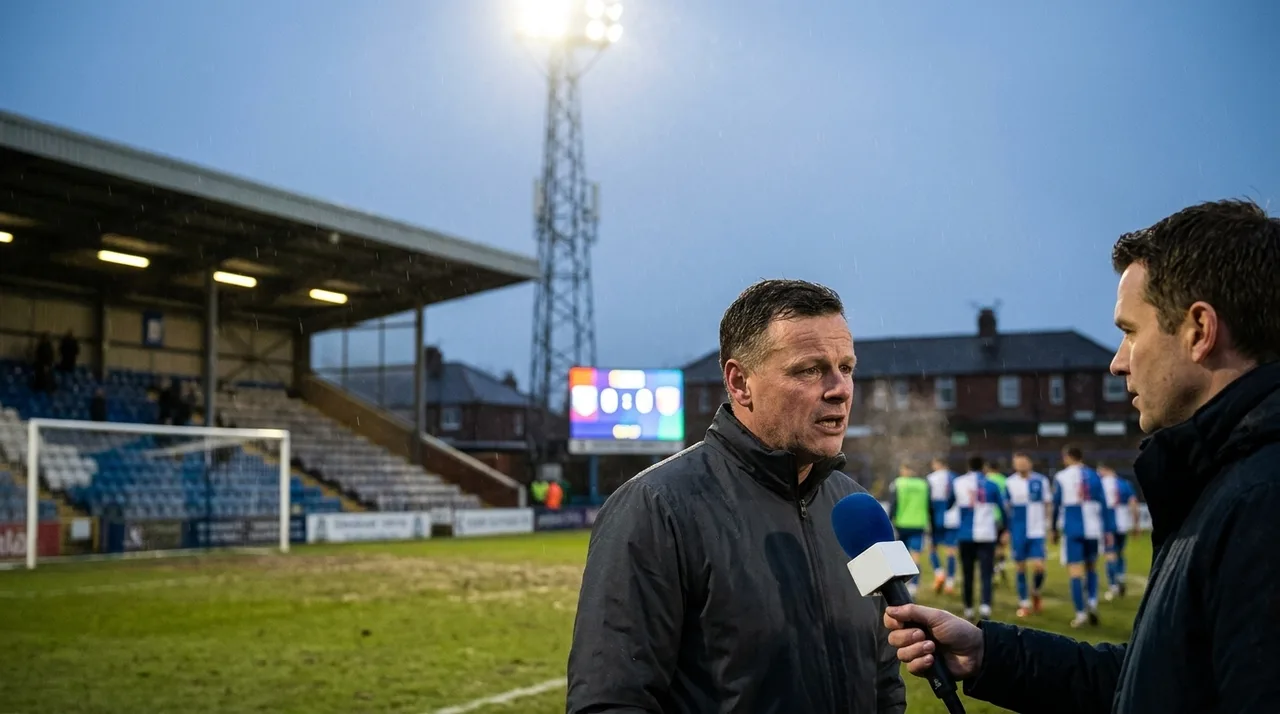
Leyton Orient manager Richard Wellens did not shy away from the uncomfortable truth after his side fell to a home defeat against Sheffield Wednesday, telling BBC London's Dave Victor that a calamitous passage of play had ultimately decided the contest.
A spell that unravelled the O's
"We had a crazy twenty minutes," Wellens said in his post-match interview, a summary that will ring uncomfortably familiar to Orient supporters who have seen leads or promising positions slip away in similar fashion before.
The defeat at Brisbane Road is a blow for a Leyton Orient side looking to establish themselves competitively in League One this season. Home results matter enormously at this level, where the difference between a play-off push and a mid-table drift can be decided by a handful of home points dropped against sides of comparable ambition.
Sheffield Wednesday, also competing in the third tier this season, will take the points and the confidence that comes with winning on the road. Away victories in League One are never easy to come by, and Wednesday will regard this as a useful return.
Wellens keeps his counsel
The Orient manager's phrase, brief as it is, carries a particular weight. "Crazy" is not a word a football manager uses lightly in a post-match interview. It suggests the kind of concentrated collapse, goals conceded in quick succession or a red card and a penalty in the same passage, that shifts momentum so decisively that the rest of the match becomes almost academic.
Wellens did not, at least in the excerpts available, reach for excuses or deflect blame towards officials. That restraint is worth noting. Press-release management-speak this was not. A manager calling his own team's performance "crazy" is, in its way, a more honest accounting than the standard repertoire of "we'll look at the video" and "the boys gave everything."
The question for Orient now is whether those twenty minutes represent a correctable habit or something more deeply embedded in how this squad responds to pressure. That is the kind of diagnostic question that will keep Wellens and his coaching staff busy on the training ground in the coming days.
What it means for the table
Dropping home points this early in the League One campaign creates an immediate need to respond. The third tier is an unforgiving division in the sense that other clubs bank wins with a regularity that makes any lapse difficult to recover from quickly. Orient will be well aware that every point available at Brisbane Road is worth considerably more to a promotion or top-half ambition than points dropped at home tend to look when the final reckoning arrives in May.
Sheffield Wednesday, for their part, will have taken note of what they were able to exploit. League One opponents study each other closely, and a "crazy twenty minutes" of vulnerability will not go unobserved by future opponents watching the footage.
The road ahead
Wellens has work to do. The O's fanbase, loyal and voluble in equal measure, will want to see a response sooner rather than later. In a division this competitive, the margin for back-to-back home setbacks is slim. The manager's candour after the final whistle at least suggests he has a clear-eyed view of what went wrong. Whether he can translate that clarity into a fix on the pitch is, for now, the only thing that matters.
Frequently asked
- What did Leyton Orient manager Wellens say after the defeat to Sheffield Wednesday?
- Richard Wellens told BBC London that a 'crazy twenty minutes' cost Leyton Orient the match, pointing to a damaging spell in the game as the decisive factor in the home defeat.
- What was the result between Leyton Orient and Sheffield Wednesday?
- Sheffield Wednesday won at Brisbane Road, handing Leyton Orient a home defeat in their League One fixture. A specific scoreline was not confirmed in the available report.
- How does the loss affect Leyton Orient's League One season?
- Dropping home points early in the League One campaign is damaging, as the third tier is tightly contested and rivals are quick to accumulate wins. Orient will need a swift response to avoid falling behind the pace.